
 PASTEUR2030
Greater Paris regional council supporting the future research center on vector-borne diseases

The upcoming research center on vector-borne diseases (CMTV) is a large-scale real-estate venture that required a complete overhaul of the Darré, Borrel and Viala buildings. The lower floors and first upper levels are now in place and the building work is continuing on schedule.
For the new building to be completed by 2027/2028, the Institut Pasteur has the support of the Greater Paris regional council, a key partner in the project. The regional council recently announced its financial contribution on two counts: construction of the infrastructure itself and installation of certain equipment – as costly as it is vital to the ambitious scientific research to be conducted in the new center.
With the CMTV project and thanks to this aid, the Institut Pasteur is set to rank among Europe's leading institutions for One Health research and will consolidate its role as a key public health stakeholder. This scientific visibility will be showcased at the Presidential One Health Summit held in Lyon from April 5 to 7.

"This dual support from the Greater Paris region is a strong indicator of the ambition and scientific excellence of the CMTV project. I would like to congratulate all the teams actively working on this complex project that combines a wide range of expertise. This center will offer us an extraordinary research facility that will proudly fly the colors of the Institut Pasteur's research."
Patrick Trieu-Cuot, Vice-President Scientific Affairs
State-Region Plan Contract (CPER) for the Greater Paris region
In December, the President of the Greater Paris regional council, Valérie Pécresse, announced "the resumption of funding for operations within the 2021-2027 CPER (State-Region Plan Contract, see inset below) with a regional budget set to boost pending projects in a bid to address priority needs, particularly projects with a maturity level ensuring rapid implementation." One of the priority projects was construction of the "Institut Pasteur's research center on vector-borne diseases", which was awarded a budget of €10 M by a regional council decision voted on January 29. This budget will fund construction of the infrastructure itself, in line and compliance with the standards set for this unique building.
Greater Paris region SESAME FEDER program for facilities
The future center will also receive support from the Greater Paris regional council through a budget allocation from the SESAME FEDER program (see inset below), co-funded by the European Union, amounting to almost €3.5 M awarded to the FROZEN-3 project presented by the Institut Pasteur in 2024 and led by Michael Nilges, Matthijn Vos and Ariane Briegel. This project is closely related to the CMTV project and will be essential for developing technological facilities to conduct analyses using high-resolution electron cryomicroscopy. These imaging techniques will enable molecular-level study of the most critical microbial pathogens and their mechanisms of infection without denaturing them. The facility is unique in terms of services and the expertise it provides and will be available for use by the scientific community at the Institut Pasteur and in the Greater Paris region, as well as nationwide and globally. The resulting interdisciplinary collaboration will illustrate the outstanding research conducted in the Greater Paris region and at both national and international level. The research achieved through the FROZEN-3 program will contribute significantly to the advancement of drug discovery science and elucidation of pathogenic processes, thus positioning the region at the cutting-edge of scientific investigation.
Further information (in French)
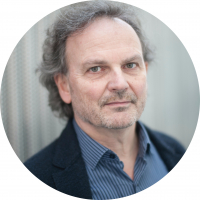
"I would emphasize that FROZEN-3 is above all a hugely collaborative project, mirroring its ambition to develop a world-unique nanoimaging platform in BSL-3 conditions and allowing us to study pathogens and infected cells in their near-native state using electron cryomicroscopy. This ambitious project was enabled by the contributions of Ariane Briegel and Matthijn Vos. We also benefited from decisive support from the Grants Office, in particular Shauna Lee Katz. Lastly, through discussions, advice and support, many colleagues on campus helped bring this vision to life, and it far exceeds current capacities and offers unprecedented prospects for studying host–pathogen interactions."
Michael Nilges, Head of the Structural Bioinformatics Unit and former Vice-President Technology
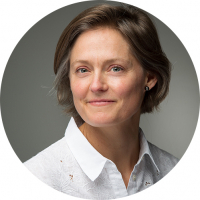
"These two funding packages are essential to achieving the goals of the CMTV project in terms of both real estate and technology. They demonstrate the innovative dimension of this project, its ambition and the collective efforts of all the teams involved: the Department of Corporate Social Responsibility and Technical Resources/DRSE-RT (Real Estate and Technical Department/SIT, CSR/RSE, Risk Prevention Department/SPR), the real estate project management consortium, Nanoimaging platform, Integrative Structural Cell Biology Unit, Department of Technology, Grants Office, and our support services.
Thank you all for your expertise and commitment to this major project for the Institut Pasteur."
Anna Kehres, CMTV Infrastructure Project Manager
This unique new building is notable for the complexity of its technical challenges and its environmental ambition. Construction is currently underway amidst the bustle of our campus and calls for optimal logistical organization and close coordination with the neighboring Roux building site to ensure architectural implementation within its heritage setting.
Designed with an ambitious environmental approach, the project targets the highest possible level (5 stars) of HQE (high environmental quality) certification, a standard for minimizing buildings' environment impact. Its construction and future use are thus particularly concerned. CMTV's design aims to use diverse recycled materials: timber façades and curtain walls, concrete finish, brick technical chimneys, and materials salvaged from demolition sites.
The future CMTV will house 3,500 m² of biosafety level 2 and 3 laboratories with suitable equipment and two laboratories for health emergencies. It will also house more "conventional" laboratories, insectariums and animal facilities, offices, meeting rooms and technical premises. In total, the CMTV will host 240 researchers and experimenters, Institut Pasteur staff or partners, with spaces earmarked for external partners (see the newsletter article of February 6 on the first entities to move to the CMTV). Il regroupera également des infrastructures plateformes de pointe, dans le respect de plusieurs normes environnementales, afin de renforcer l’excellence scientifique de l’Institut Pasteur, et de la France, dans le domaine de la recherche autour des maladies vectorielles. Cette composition riche et variée représente aussi un défi d’intégration pour répondre aux défis de recherche et de santé.
What is a CPER? CPER with the Greater Paris region What is the SESAME FEDER program? | ||